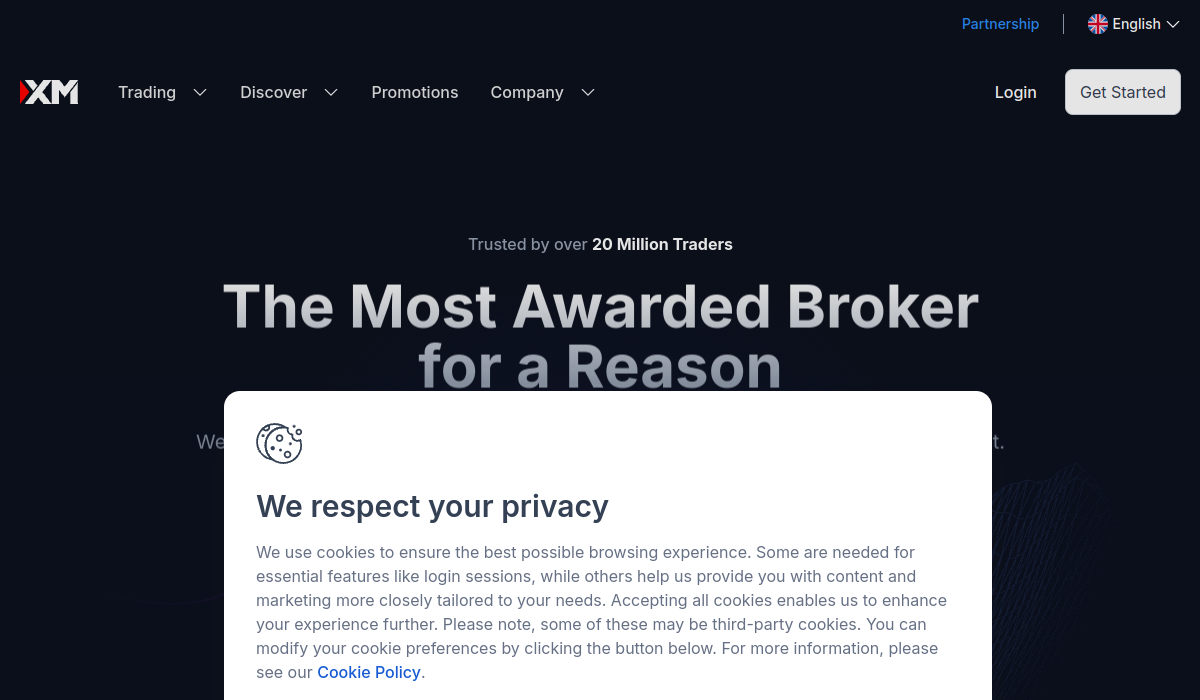
XM's homepage.
Overview
XM (operated by the Trading Point group) has been active since 2009, regulated through entities under CySEC (licence 120/10), ASIC (443670), the FCA (705428), Belize's FSC, and Dubai's DFSA, one of the wider regulatory footprints we cover. It's built its reputation around a low barrier to entry rather than raw institutional-style pricing.
The standout figure here is the $5 minimum deposit, widely corroborated across independent sources, alongside a wide choice of account base currencies (USD, EUR, JPY, GBP, AUD, CHF, ZAR, HUF, SGD, PLN), the broadest currency list among the brokers we cover.
Trading Costs
The Micro and Standard accounts run "as low as 1 pip" on EUR/USD (variable, not guaranteed), while the Ultra Low account brings that down to around 0.6 pips. A separate Zero account offers commission-based raw pricing but is limited to USD/EUR/JPY base currencies; recent testing puts its EUR/USD average around 0.22 pips. If tight raw spreads are your top priority, IC Markets or Admirals' Zero account currently run tighter still for high-volume trading.
Platforms
XM supports MT4 and MT5 only, with no cTrader and no proprietary desktop platform beyond a WebTrader/app layer on top of MetaTrader. Platform choice here is narrower than several competitors on this list.
Strengths
- Very low $5 minimum deposit, one of the lowest we cover
- Four regulators (CySEC, ASIC, FCA, DFSA) plus a Belize entity for broader global access
- Widest base-currency selection among the brokers we cover
- Negative balance protection across regions, and strong educational content cited widely
Watch Out For
- No true ECN/raw account, so spreads run comparatively wide versus raw-pricing competitors
- Inactivity fee applies relatively quickly, after just 90 days of no activity
- Large leverage gap between regulated entities (1:30) and the offshore Belize entity (up to 1:1000)
- No cTrader platform option
Our Verdict
XM is a strong starting point if you want the lowest possible barrier to entry and broad currency flexibility, but it's not the cost-optimal choice for higher-volume traders who'd benefit more from a true raw/ECN account elsewhere. Confirm which entity you're onboarded to given the meaningful leverage and protection gap between XM's regulated and offshore arms.
